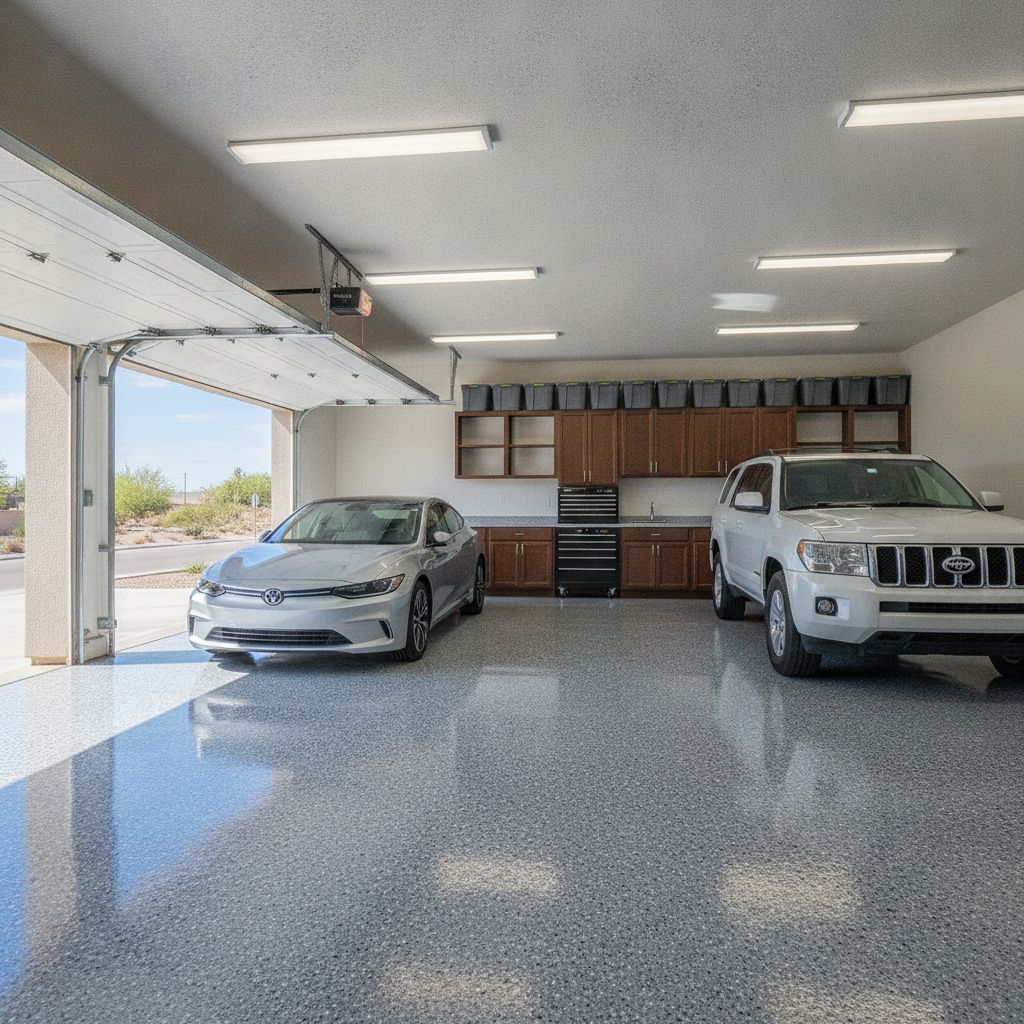
Arizona doesn't just get hot — slab and ambient temperatures during summer months push coatings to their real performance limits. Choosing between polyurea and epoxy for a garage, patio, or facility floor comes down to how each chemistry actually behaves under that heat, not just their showroom finish.
Polyurea is an elastomer — it stays flexible across a wide temperature range, which matters when a slab expands and contracts through Arizona's extreme day-to-night and seasonal swings. Standard epoxy is more rigid, which can make it more prone to cracking or stress fractures over repeated thermal cycling.
Direct desert sun is unforgiving on any exposed coating. Polyurea formulations used for exterior and garage applications are generally UV-stable, resisting the yellowing and chalking that unstabilized standard epoxy can show after a season or two of direct exposure.
Epoxy typically needs a longer cure window — often 24-72 hours before light traffic, and longer for a full cure. Polyurea cures dramatically faster, with many systems walkable the same day and driveable within 24-48 hours — a real advantage if a garage or facility floor can't be out of service for days.
Because polyurea is more flexible and impact-resistant than rigid epoxy, it tends to handle dropped tools, hot tire pickup, and chemical spills with less risk of chipping or lifting — relevant for both a residential garage and a working commercial floor.
For Arizona specifically, polyurea's combination of heat stability, UV resistance, and fast cure makes it the stronger fit for most garage, patio, and facility applications where the floor sees real sun and real temperature swings. Arizona Polyurea Coating will walk through the tradeoffs for your specific space during a free on-site assessment.
No obligation. We'll assess your space and give you a real number.