Slab-on-grade construction — where the concrete floor sits directly on the ground rather than over a basement or crawl space — is the standard foundation type across most of Arizona. It's also one of the main reasons moisture-vapor transmission matters more here than homeowners often expect.
Concrete is porous. Even in a dry climate, moisture in the ground beneath a slab can migrate upward as vapor over time — irrigation, soil composition, and even the concrete's own curing chemistry can all contribute, regardless of how dry the air above the slab feels.
When vapor gets trapped beneath a coating that isn't designed to handle it, pressure builds at the bond line between the slab and the coating. The result is blistering, bubbling, or full delamination — often showing up months after a coating looked perfect on installation day.
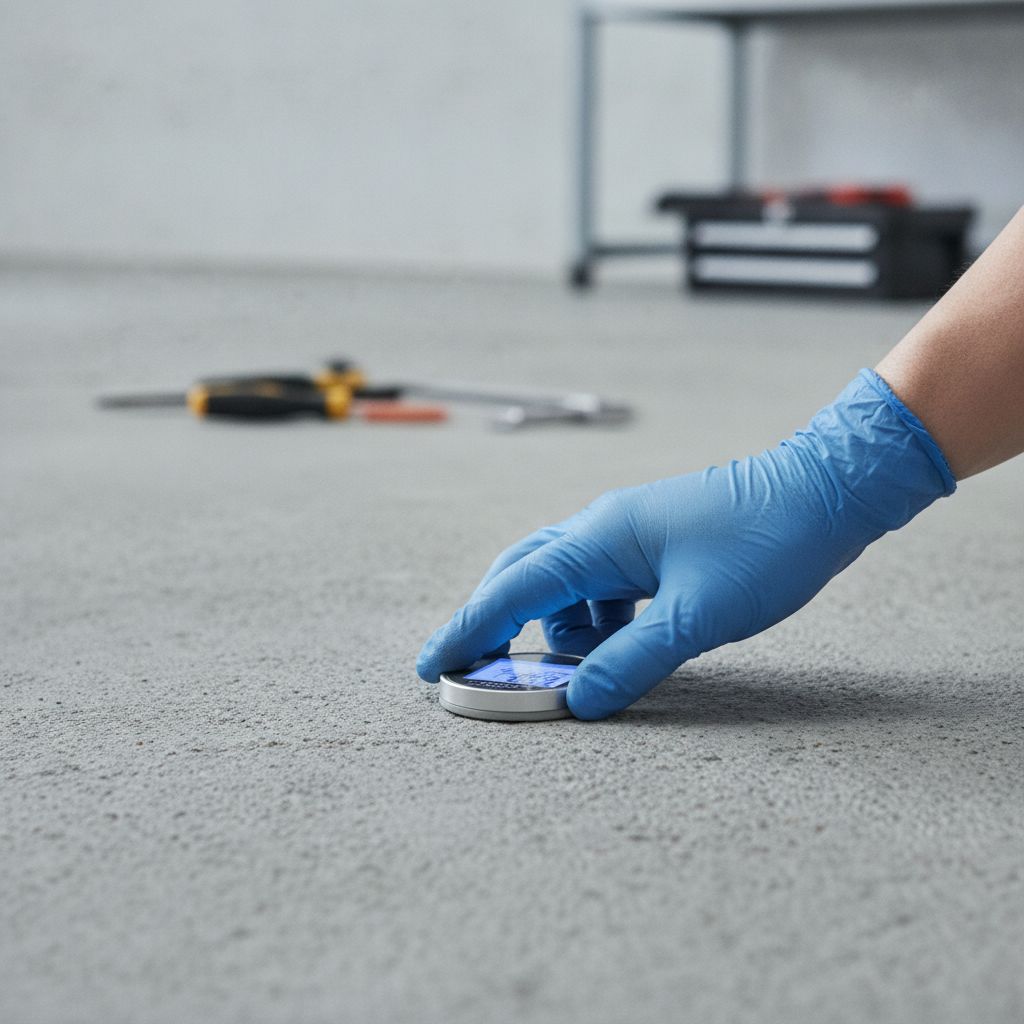
Before any coating goes down, we test slab moisture — commonly via calcium chloride or relative-humidity testing — to determine whether standard prep is sufficient or whether a vapor-barrier system is needed underneath the finish coat.
A vapor-barrier polyurea system creates a moisture-blocking layer between the slab and the finish coat, engineered specifically for slabs with elevated moisture readings. It's not needed on every job, but skipping the test isn't worth the risk. Arizona Polyurea Coating tests every slab before quoting a system — reach out for a free assessment.
No obligation. We'll assess your space and give you a real number.